Introduction
The Nadimarg Massacre of 23 March 2003 left deep and lasting scars on the surviving members of the Kashmiri Pandit community. Over the years, several survivors and family members have spoken publicly about the events of that night, preserving memories that might otherwise have been lost to history. Their testimonies collectively provide an invaluable human perspective on a tragedy that is often reduced to dates, numbers, and official records.
Among these voices is that of Ramesh Kumar Bhat, whose account is preserved in the documentary Notebook from Kashmir. His testimony is not presented as more important than those of other survivors; rather, it offers one deeply personal window into the experience of loss, survival, and remembrance. Through his recollections, viewers gain insight into the emotional reality faced by families affected by the massacre and the enduring impact that such violence leaves across generations.
In Notebook from Kashmir, filmmaker Naveen Pandita traces the story of an old notebook discovered in an abandoned Kashmiri Pandit home in Nadimarg. His search for its owner eventually leads him to Ramesh Kumar Bhat, whose memories transform the notebook from a forgotten object into a powerful symbol of family, home, and a community forever changed by tragedy.
What emerges is not only the story of one survivor, but also a reflection of the grief, resilience, and longing shared by many who lived through the events of that period.
A Chance Decision That Saved His Life
According to Ramesh Kumar Bhat’s account in the documentary, he had intended to return to Nadimarg on the night before the massacre. However, circumstances changed his plans.
He recalls that a friend persuaded him to stay back rather than continue his journey. A Cricket World Cup match was being played that evening, and the two remained together instead of travelling onward. What appeared to be an ordinary and insignificant decision at the time would ultimately save his life.
The following day, news began to emerge that something terrible had happened in Nadimarg.
Ramesh has described the agonizing uncertainty that followed. As reports of killings spread, he desperately hoped that members of his family had survived. In particular, he repeatedly recalled praying for the safety of his younger brother, whom he affectionately referred to as “Chotu.”
The Search for Family
One of the most moving aspects of Ramesh Kumar Bhat’s testimony is the way he describes those hours of uncertainty.
He recounts that while others were discussing the scale of the tragedy, his thoughts remained fixed on his family. Above all, he hoped that his younger brother had somehow escaped.
The documentary captures not only the factual events surrounding the massacre but also the emotional reality of waiting for news that no family should ever have to receive.
Years later, Ramesh still speaks of those moments with visible pain, demonstrating how the passage of time has done little to lessen the loss.
The Story of His Younger Brother
Among the memories that continue to haunt him is the account of his younger brother’s final moments.
According to testimony recounted in the documentary, another young person reportedly found an opportunity to escape from the attackers and urged Ramesh’s younger brother to flee as well. However, he is said to have refused because he did not wish to abandon elderly family members and others who remained in danger.
This recollection occupies a central place in Ramesh’s memories. More than two decades later, he continues to reflect on the painful reality that his brother may have had a chance to save himself but chose instead to remain with his family.
As with many survivor testimonies, this account reflects personal recollection and family memory and should be understood within that context.
The Notebook
The notebook that gives the documentary its title serves as a powerful symbol of continuity between the past and the present.
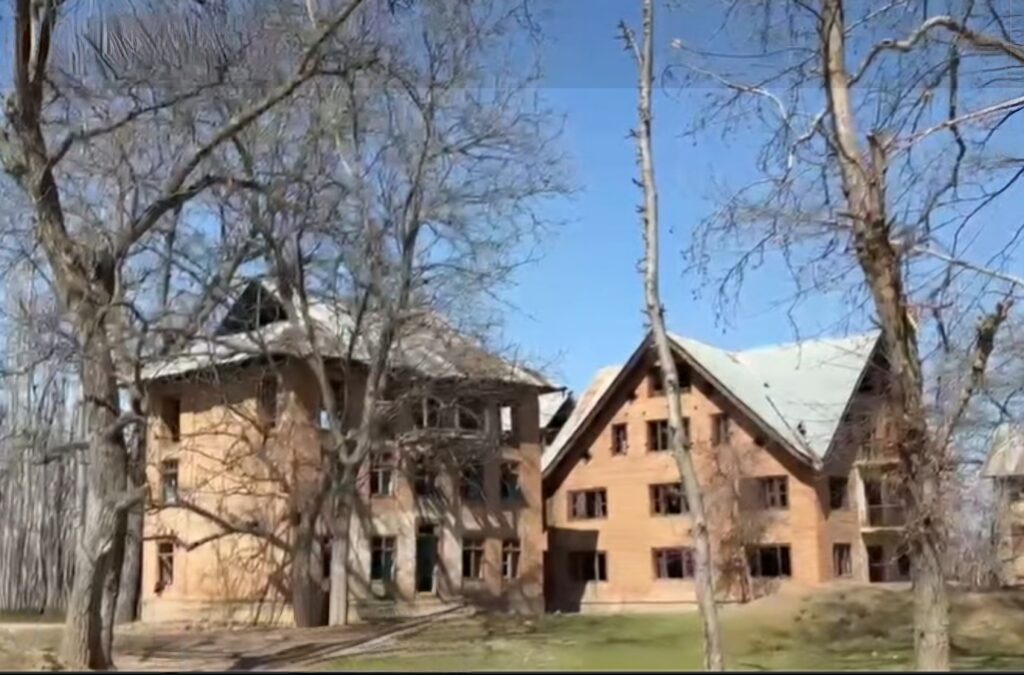
Discovered years after the massacre in an abandoned house in Nadimarg, the notebook contained ordinary traces of everyday life—notes, writings, and memories left behind by a family whose world was suddenly shattered by violence.
When the notebook was eventually returned to Ramesh Kumar Bhat, it became more than a recovered object. It represented a tangible connection to a lost home, a lost community, and loved ones who would never return.
The emotional power of the documentary lies not only in its discussion of tragedy but in its demonstration that memory itself survives, even when homes are abandoned and communities are displaced.
Memory and Legacy
Ramesh Kumar Bhat’s testimony is important because it preserves a human perspective that statistics alone cannot convey.
The Nadimarg Massacre is often summarized through dates, casualty figures, and investigative records. Survivor accounts remind us that behind every number was a family, a home, and a future that was abruptly interrupted.
His story also illustrates the role of chance in survival. A simple decision not to travel home that night allowed him to live. Yet survival came at a profound personal cost, leaving him to carry memories that continue to shape his life decades later.
Editorial Note
This testimony is based primarily on statements made by Ramesh Kumar Bhat in the documentary Notebook from Kashmir. Certain details represent personal recollections and family memories rather than findings established through judicial proceedings or official investigations. They are included here as survivor testimony and should be understood in that context.