A Village Remembered
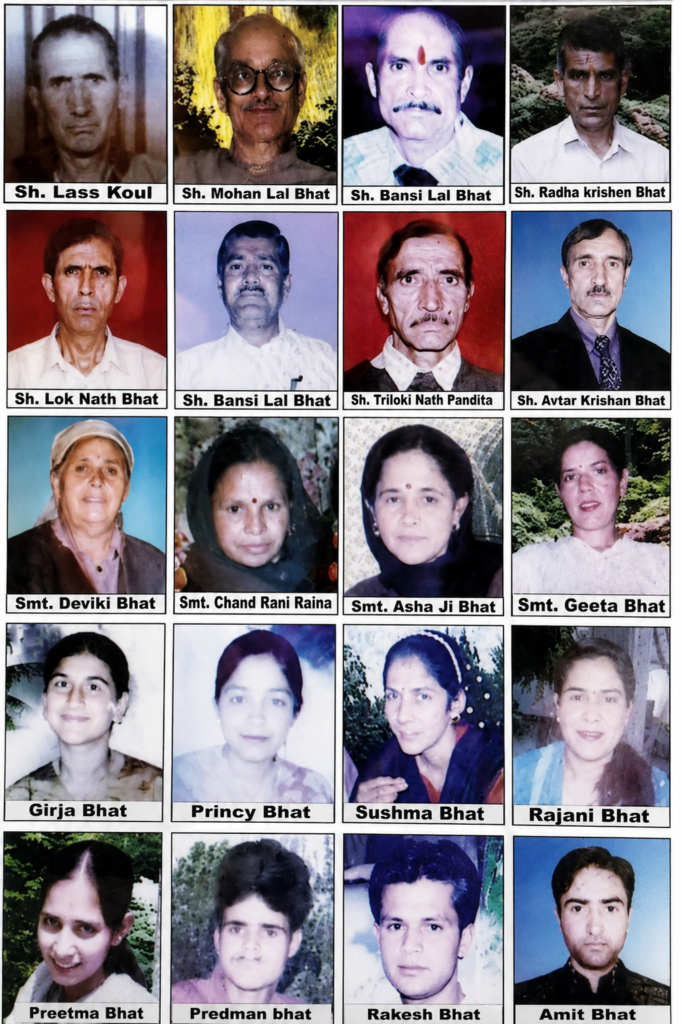
Dedicated to the memory of the twenty-four members of the Kashmiri Pandit community who lost their lives in the Nadimarg Massacre of 23 March 2003.
Introduction
On the night of 23 March 2003, the quiet village of Nadimarg in the Pulwama district of Kashmir witnessed one of the darkest episodes in the history of the Kashmiri Pandit community. Twenty-four innocent men, women, and children were taken from their homes and killed in an act of brutal violence that shocked the nation and left an indelible scar on the collective memory of Kashmir.
For generations, Nadimarg had been home to a small but resilient community of Kashmiri Pandits who had chosen to remain in the Valley despite years of uncertainty and displacement. They lived as neighbours, friends, teachers, farmers, parents, and grandparents. Their lives were rooted in the land, their traditions, and their faith.
This memorial page is dedicated to their memory. It seeks not to revisit political debates or assign blame, but to remember the individuals and families whose lives were cut short and to preserve their names for future generations.
The Village of Nadimarg
Nestled amidst the orchards and fields of South Kashmir, Nadimarg was once a vibrant village where families had lived for generations. By 2003, many Kashmiri Pandits had already left the Valley following the turmoil of the 1990s, yet a small number of families continued to call Nadimarg home.
Their presence reflected a determination to remain connected to their ancestral homeland despite changing circumstances. The community was close-knit, and many families were linked through kinship, friendship, and shared traditions.
The events of 23 March 2003 would forever alter the history of the village.
The Night of 23 March 2003
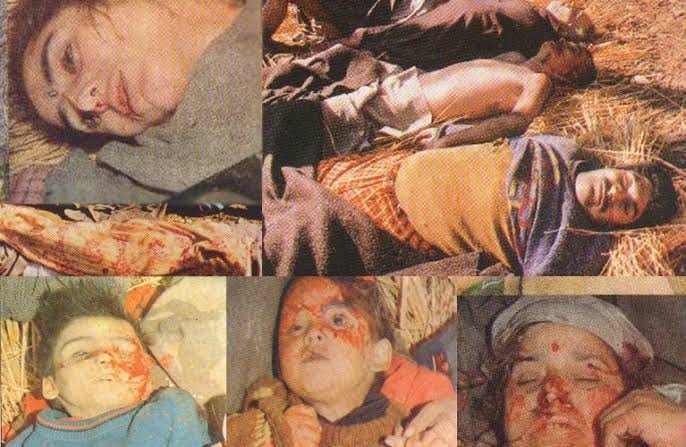
According to contemporary reports, armed militants entered Nadimarg during the night and gathered members of the local Kashmiri Pandit community. Men, women, and children were separated from the safety of their homes and taken to an open area where they were shot.
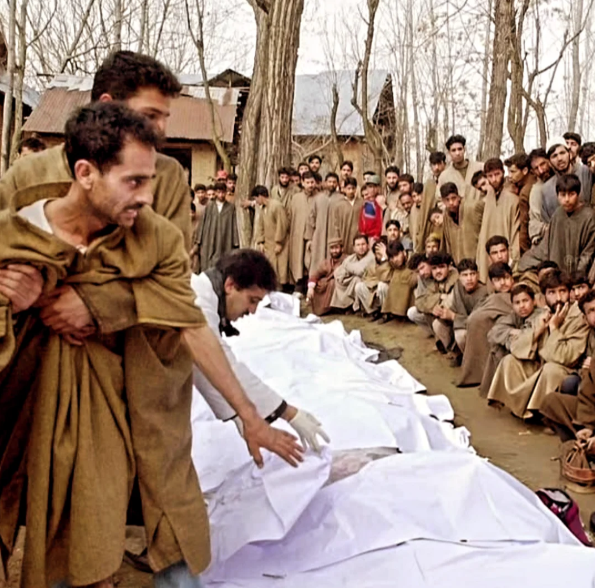
The attack claimed twenty-four lives and left survivors carrying memories that would remain with them for the rest of their lives.
The massacre drew national and international attention and became one of the most widely remembered attacks on Kashmiri Pandits who had remained in the Valley after the mass exodus of the early 1990s.
More than two decades later, the names of those lost continue to be remembered by their families, friends, and the wider Kashmiri Pandit community.
Image
The Families We Remember
The tragedy of Nadimarg was not merely the loss of twenty-four individuals. Entire families were devastated in a single night. Parents lost children, children lost parents, and generations of family history were extinguished together.
The Bansi Lal Family
Bansi Lal (70), son of Daya Ram
Ashajee (Bindri) , wife of Bansi Lal
Rajni (22), daughter of Bansi Lal
Girja Kumari (23), daughter of Bansi Lal
Princy (27), daughter of Bansi Lal
Five members of one family were lost.
The Radhakrishan Family
Radhakrishan (60), son of Kanth Ram
Geeta
Pradhiman Krishan (25), son of Radhakrishan
Three members of one family were lost.
The Jiya Lal Bhat Family
Jiya Lal Bhat (80)
Devki (75), wife of Jiya Lal Bhat
Sushma (26), daughter of Jiya Lal Bhat
Avtar Krishan (55), son of Jiya Lal Bhat
Bansi Lal (50), son of Jiya Lal Bhat
Rakesh Kumar (22), son of Jiya Lal Bhat
Umat Kumar (20), son of Avtar Krishan
Three generations of the same family perished.
The Manohar Nath Pandit Family
Triloki Nath (55), father of Manohar Nath Pandit
Sangeeta (30), wife of Manohar Nath Pandit
Suraj Kumar (3), son of Manohar Nath Pandit
The Satish Kumar Pandit Family
Suman (Julie) (30), wife of Satish Kumar Pandit
Monu Raj (2), son of Satish Kumar Pandit
Others Remembered
Lok Nath (40), son of Kanth Ram
Ramesh Pandit
Lassa Koul (70), son of Govind Ram
Chand Rani (40), wife of Chuni Lal
Each name represents a life lived, a family cherished, and a future that was never allowed to unfold.
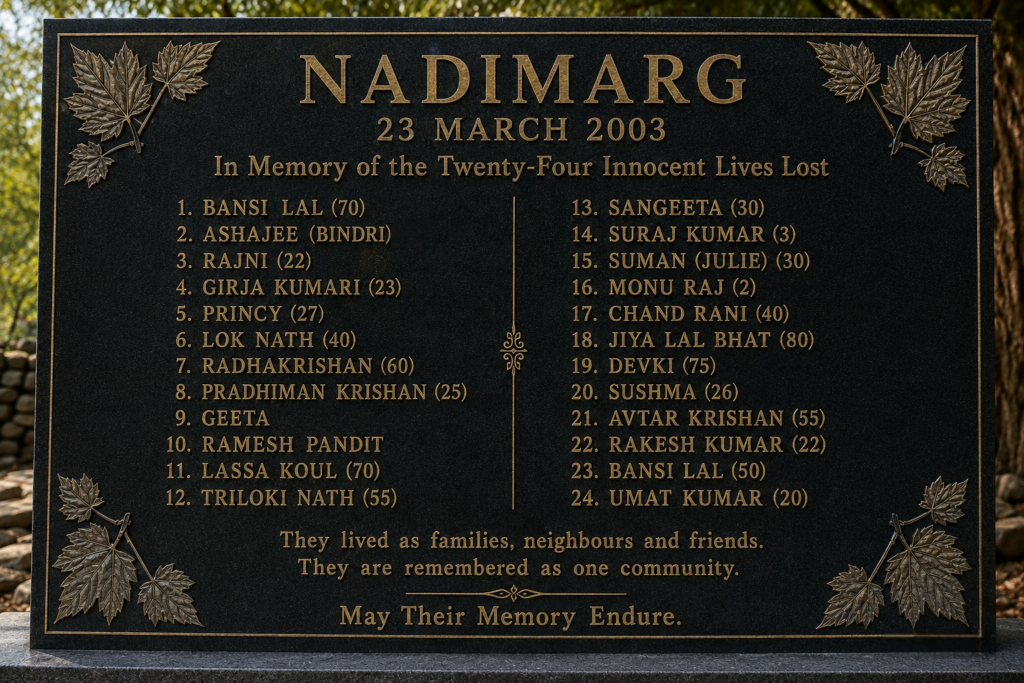
Roll of Honour
The following twenty-four individuals lost their lives in the Nadimarg Massacre:
- Bansi Lal (70)
- Ashajee (Bindri) (40)
- Rajni (22)
- Girja Kumari (23)
- Princy (27)
- Lok Nath (40)
- Radhakrishan (60)
- Pradhiman Krishan (25)
- Geeta (40)
- Ramesh Pandit
- Lassa Koul (70)
- Triloki Nath (55)
- Sangeeta (30)
- Suraj Kumar (3)
- Suman (Julie) (30)
- Monu Raj (2)
- Chand Rani (40)
- Jiya Lal Bhat (80)
- Devki (75)
- Sushma (26)
- Avtar Krishan (55)
- Rakesh Kumar (22)
- Bansi Lal (50)
- Umat Kumar (20)
Those Who Survived
History remembers the names of those who were lost. It must also remember those who survived.
Among the known survivors of the Nadimarg Massacre were:
Chuni Lal (who was injured during the attack)
Deep
Mohan Lal Bhat
Ramesh Koul
Phoola Devi
Gunwati
Som Nath, his wife, and son
Sanjay Koul
Manohar Nath Pandit
Pran Nath Bhat
Rohit
Bhushan Lal
Their lives became living testimony to the events of that night. In the years that followed, they carried forward the memories of parents, spouses, children, siblings, neighbours, and friends who never returned.
A Survivor’s Voice
Historical records can tell us what happened.
Survivor testimony helps us understand what it felt like.
Among the survivors of Nadimarg was Ramesh Kumar Bhat, whose reflections were later documented in the film Notebook from Kashmir by filmmaker Naveen Pandita.
The documentary follows the journey of an old notebook discovered in an abandoned Kashmiri Pandit home in Nadimarg and its eventual return to its owner. Through that journey emerges a deeply personal account of loss, memory, and survival.
Ramesh Kumar Bhat recalls the events surrounding the massacre, the loved ones he lost, and the enduring emotional burden carried by those who survived. His testimony serves as a reminder that while communities may be displaced and homes abandoned, memory itself endures.
Read Next: Ramesh Kumar Bhat – Survivor Testimony
You may also watch the documentary:
Notebook from Kashmir – A film by Naveen Pandita
Legacy and Remembrance
More than twenty years have passed since the tragedy at Nadimarg.
Children who survived have grown into adults. Families have rebuilt their lives in different cities and countries. Yet the memory of Nadimarg remains deeply woven into the history of the Kashmiri Pandit community.
This memorial is offered in remembrance of those who lost their lives and in honour of those who continue to preserve their stories.
The purpose of remembrance is not to perpetuate division but to ensure that lives are not forgotten and that future generations understand the human cost of violence.
The names recorded here were not merely entries in a report. They were fathers and mothers, sons and daughters, husbands and wives, grandparents and grandchildren.
They lived as families, neighbours, and friends.
They are remembered as one community.
Corrections and Additional Information
This memorial has been prepared with great care using publicly available records, survivor accounts, published sources, and community contributions. Despite our best efforts, historical records from this period may occasionally contain inaccuracies, omissions, or variations in names, dates, relationships, and other details.
If you believe any information on this page requires correction, clarification, or supplementation, we would be grateful to hear from you. We especially welcome input from family members, survivors, researchers, and others with first-hand knowledge of the individuals and events documented here.
Please contact us at kashmiripanditmemorial@gmail.com with supporting information, references, or documentation where available. All submissions will be reviewed carefully before any changes are made. Our shared objective is to preserve these memories with dignity, accuracy, and respect for future generations.